Beyond reminders: How shared health habits quietly strengthened our family bond
You know those moments—someone forgets their water bottle, your partner skips a workout, or your teen stays up too late scrolling? We’ve all been there. For years, our family struggled with staying consistent on small health goals. Then we started using simple tools to track habits—together. It wasn’t about perfection, but progress. And slowly, something unexpected happened: those daily check-ins became quiet moments of connection, care, and mutual encouragement that changed how we show up for each other. What began as a practical fix turned into something deeper—a shared language of support, built not in grand gestures, but in tiny, daily acts of showing up.
The Small Habits That Were Slipping Through the Cracks
It wasn’t that we didn’t care. We talked about health all the time—eating more vegetables, drinking enough water, getting outside. But actually doing it? That was another story. I’d start strong with a new water-tracking app, only to forget it by day three. My son downloaded a step counter after a school project on fitness, walked everywhere for a week, then stopped. My husband would excitedly install a meditation app, try it once, and never open it again. The intentions were real, but the follow-through was fragile. And honestly, it started to feel discouraging. Every abandoned effort became another quiet reminder of how hard it was to stay consistent—even with something as simple as remembering to stretch in the morning.
Looking back, I realize we weren’t failing because we lacked willpower. We were failing because we were trying to do it alone. Health had become a personal project, something each of us was supposed to manage quietly on our own. But life gets busy—meals get rushed, work piles up, kids have late practices, and before you know it, the day’s gone and no one remembered to take their vitamins, let alone go for a walk. The real issue wasn’t motivation; it was isolation. We were all trying to do the same things—drink more water, move our bodies, sleep better—but we were doing it in silence, without support. And that made all the difference.
What we needed wasn’t another app or a stricter schedule. We needed each other. We needed a way to make health feel less like a chore and more like a shared value. Something that reminded us we were in this together, not just as individuals trying to improve, but as a family trying to care for one another. That shift—from individual effort to shared intention—is what eventually changed everything.
Discovering the Power of Shared Tracking
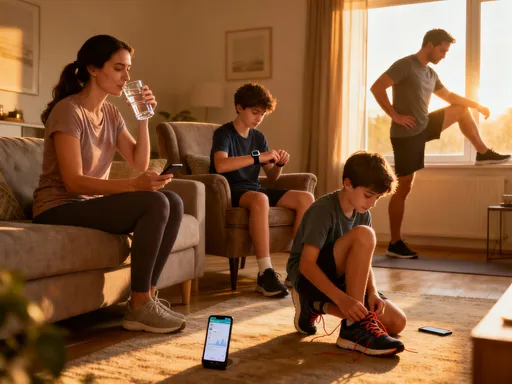
The turning point came when I stumbled upon a simple habit-tracking app that allowed us to create shared goals. At first, I wasn’t sure it would work. Would my husband think it was weird? Would my kids roll their eyes? I almost didn’t suggest it, afraid it would feel forced or overly techy. But I took the chance and said, “What if we all tried tracking one small thing—together?” We started small: just water intake. Each of us committed to drinking eight glasses a day and logging it in the app. No pressure, no judgment—just a shared goal.
At first, it felt a little awkward. I’d see my son’s check-in pop up—“6 glasses done!”—and I’d smile, then feel a little proud that I’d already logged mine. My husband, usually quiet about these things, surprised me by posting a note: “Forgot at lunch, but caught up. Still counts!” That tiny message did something unexpected—it made me feel less alone. I wasn’t the only one who slipped up. I wasn’t the only one trying. And seeing his effort, even in a small notification, made me want to keep going.
What we discovered was that the app wasn’t really about tracking water. It was about visibility. It gave us a window into each other’s small, daily efforts. We weren’t watching each other—we were witnessing each other. And that made all the difference. My daughter started leaving sticky notes on the fridge: “Don’t forget to log your water!” Not as a nag, but as a cheer. The app didn’t replace conversation, but it created a new kind of connection—one built on quiet encouragement and shared progress.
Over time, those little check-ins became something we looked forward to. It wasn’t about winning or being perfect. It was about showing up. And in a world where so much feels disconnected, that small act of saying “I did it today” in a shared space became a quiet source of strength.
From Individual Goals to Family Routines
What started as separate goals slowly began to blend into shared routines. After a few weeks of tracking water, we decided to try something new: sleep. We all agreed to aim for seven hours a night and log our bedtime and wake time. At first, it felt like another task on the list. But then something shifted. Bedtime became a conversation. Instead of me reminding everyone to go to sleep, I’d say, “I’m logging my wind-down time—anyone joining?” And more often than not, someone would.
My daughter started brushing her teeth right after me so she could mark her check-in at the same time. My son, who used to stay up late scrolling, began setting his own alarms to start winding down. “I want to hit my streak,” he’d say. The app didn’t replace parenting, but it gave us a neutral, positive way to encourage each other. There was no yelling, no power struggles—just a shared goal and the quiet satisfaction of checking it off together.
Even mealtime changed. We started planning dinners with our goals in mind. “Let’s make a big salad tonight—we’re all trying to eat more greens,” I’d say, and someone would pull up the app to show how many days in a row we’d logged a vegetable serving. It wasn’t about strict rules or perfect eating. It was about making small, intentional choices—together. And over time, those choices became habits, and the habits became part of who we were as a family.
The real magic wasn’t in the data. It was in the way we began to show up for each other. We weren’t just tracking habits—we were building a rhythm, a shared language of care that made healthy living feel less like a burden and more like a bond.
How Frequency Builds Emotional Momentum
The real shift didn’t happen overnight. It came from consistency—from doing the small thing, day after day. Logging our water, our steps, our sleep—these tiny acts created a rhythm in our lives. And over time, that rhythm changed how we related to each other. We started talking more about how we felt, not just what we did. “I logged my walk today and actually feel less stressed,” my husband said one evening. “I noticed I slept better after I stopped watching videos in bed,” my daughter shared at dinner.
Those conversations didn’t happen because of the app. They happened because the app created space for them. By checking in daily, we were giving each other permission to be seen—not just as parents, siblings, or partners, but as people trying to feel better, do better. And that visibility built trust. We began to notice when someone was struggling. If my son missed a few days of logging his steps, I didn’t assume he was being lazy. I’d ask, “Everything okay? You haven’t been walking much.” And sometimes, he’d say, “Yeah, just tired,” and we’d talk.
That’s when I realized the app wasn’t just tracking habits—it was tracking care. The repeated act of showing up, of saying “I did this today,” created emotional momentum. It wasn’t about the number of glasses or steps. It was about the message underneath: “I’m trying. I’m here. I care.” And when we all did it together, that message multiplied. We weren’t just improving our health—we were deepening our connection.
Science tells us that small, repeated positive interactions build stronger relationships. What we were doing was living proof. Each check-in was a micro-moment of connection—tiny, but powerful. And over time, those moments added up to something lasting.
Making It Work Without Pressure or Perfection
We quickly learned that pressure was the enemy of progress. If we turned it into a competition or started comparing streaks, the joy disappeared. So we set ground rules: no guilt, no scores, no shaming. Missed a day? Just start again. The goal wasn’t flawless tracking—it was showing up with kindness. We turned notifications into gentle nudges: “Hey, remember to breathe today 😊” instead of “You haven’t logged your meditation!” That small shift in tone made all the difference.
We also learned to celebrate effort, not just results. When my husband logged just five minutes of stretching—instead of the ten he aimed for—we still said, “Great job!” Because showing up for five minutes was better than not showing up at all. That mindset helped us stay consistent, even on hard days. Life happens. Some days, you’re too tired to walk. Some days, you forget to drink water until 8 p.m. And that’s okay. The goal wasn’t perfection—it was presence.
What kept it sustainable was keeping it light. We added fun emojis, sent silly messages, and laughed when someone logged “drank coffee” by mistake instead of water. We didn’t take it too seriously, and that’s why it lasted. It wasn’t another chore on the to-do list. It was a shared practice, a small ritual that reminded us we were in this together. And because it felt good, not forced, we kept coming back to it.
Real-Life Moments That Showed the Difference
One rainy afternoon, my son was in a mood. He didn’t want to go outside, didn’t want to talk, just wanted to stay on the couch. I’d just logged my 30-minute walk and posted it in our family group. A few minutes later, he walked into the kitchen, grabbed his jacket, and said, “Fine, I’ll go too—just so I can beat your steps.” We both laughed. We put on our raincoats and headed out, not because we had to, but because we wanted to. And as we walked, he started talking—about school, about a friend, about how he’d been feeling stressed. It wasn’t the exercise that mattered most. It was the unplanned time together, the conversation that might not have happened otherwise.
Those moments started happening more often. My daughter began joining me for morning stretches—not because I asked, but because she saw me doing it and wanted to be part of it. “I logged it!” she’d say, proud. My husband started meditating more regularly, not because he loved it, but because he saw me doing it and felt supported. “If you can do it, I can try,” he said. That’s the power of shared habits—it creates a ripple effect. One person’s effort inspires another, not through pressure, but through presence.
And slowly, we began to notice changes beyond the app. We were more patient with each other. We listened more. We celebrated small wins. We weren’t just building healthier bodies—we were building a healthier family culture. The technology didn’t fix everything, but it gave us a tool to care, together, in a way that felt natural and sustainable.
A Simpler, More Connected Way to Live
Today, our shared habit practice isn’t about data or achievements. It’s about presence. It’s about knowing that when I log my water, my family sees it. When my son logs his walk, I see it. And in that simple act of visibility, we feel seen. We feel supported. We feel connected. The technology fades into the background, leaving something deeper—a quiet understanding that we’re not alone in trying to be better.
What we’ve built isn’t perfect. Some days, no one logs anything. Some weeks, we forget. But that’s okay. Because the goal was never perfection. It was connection. It was creating a space where small efforts are noticed, where care is visible, where we show up for each other—not just in big moments, but in the quiet, everyday ones.
For any mom, any partner, anyone trying to hold a family together while also taking care of themselves—this is for you. You don’t need a perfect plan or a strict routine. You just need a small, shared intention. Something simple—drinking water, walking, sleeping, stretching—that you do together. Let the tech help, but don’t let it take over. Let it be a bridge, not a barrier. Let it remind you, gently, that you’re not alone.
Because in the end, health isn’t just about the body. It’s about the heart. It’s about feeling held by the people who matter most. And when we care for ourselves—together—we’re not just building better habits. We’re building a life where love shows up in the smallest, most ordinary ways. And that? That’s the kind of strength that lasts.