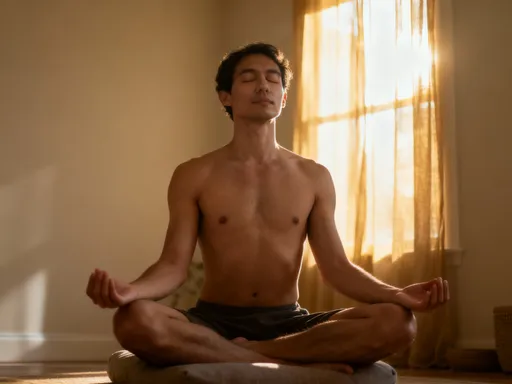
How I Grew More Flexible by Calming My Mind
Flexibility isn’t just about touching your toes—it’s about how your body responds to stress, tension, and mental load. I used to think stretching was the only way, until I noticed real change came when I slowed down my mind. Turns out, tight muscles often mirror a tight nervous system. This is why psychological adjustment methods quietly became my game-changer—no force, no pain, just progress. What began as a personal experiment evolved into a deeper understanding: true flexibility is not only physical but neurological and emotional. When we learn to calm the mind, the body naturally follows, releasing resistance and opening up in ways that no stretch alone can achieve.
The Hidden Link Between Mind and Muscle
Many people assume that stiffness is purely a mechanical issue—an inevitable result of aging, inactivity, or past injuries. Yet modern science reveals a more complex truth: physical tension is deeply intertwined with mental and emotional states. When stress arises, whether from a demanding job, family responsibilities, or unresolved worries, the body often responds by tightening specific muscle groups. Common areas like the shoulders, neck, hips, and lower back become reservoirs of stored tension. This is not coincidental. The nervous system, particularly the autonomic branch, governs muscle tone as part of its role in maintaining readiness and safety. When the mind perceives threat—even subtle, chronic stress—the body may remain in a low-grade state of alert, subtly contracting muscles as if bracing for impact.
This physiological response, known as the stress-tension cycle, explains why someone might feel stiff even after regular exercise or stretching. The body is not resisting movement due to lack of effort but because the nervous system interprets deep stretching as a potential threat. In essence, the brain may be saying, “Hold on—this movement is unfamiliar or uncomfortable, so we must protect ourselves.” This protective mechanism, while helpful in dangerous situations, becomes counterproductive when it persists during everyday activities or flexibility training. Over time, this can create a pattern where emotional strain translates into physical rigidity, making it harder to move freely and comfortably.
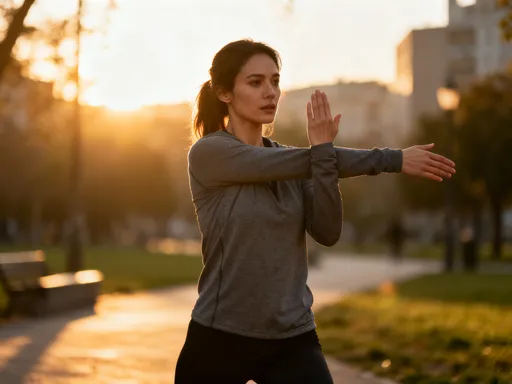
Consider a typical scenario: a woman in her early 40s spends hours at a desk managing emails, attending virtual meetings, and juggling household tasks. By evening, her shoulders are hunched, her neck aches, and her hips feel locked. She stretches nightly but sees little improvement. What she may not realize is that her body is carrying the weight of unprocessed mental load. Each unresolved worry, each moment of rushing, subtly signals the nervous system to stay vigilant. This sustained activation keeps muscles in a state of readiness, limiting their ability to relax and lengthen. The solution, therefore, is not necessarily more stretching—but a recalibration of the internal environment that governs muscle behavior.
Understanding this mind-muscle connection shifts the focus from purely structural changes to neurological retraining. Flexibility, in this view, is not just about elongating tissue but about teaching the nervous system that it is safe to let go. This perspective opens the door to gentler, more sustainable methods that address the root cause of tension rather than merely treating its symptoms.
Why Traditional Stretching Falls Short
For decades, the standard advice for improving flexibility has been simple: stretch regularly. Whether through yoga, static holds, or dynamic movements, the message has been consistent—consistency and effort will lead to results. Yet many individuals, especially those over 30, find themselves frustrated despite diligent practice. They stretch daily, follow routines, and even increase duration, yet their range of motion remains stubbornly limited. The reason lies in a fundamental misunderstanding of how muscles respond to stretching.
When a muscle is stretched too quickly or too forcefully, the body activates a protective reflex known as the **stretch reflex**. This involuntary response causes the muscle to contract in order to prevent overextension and potential injury. While this mechanism is essential for safety, it works against flexibility goals when stretching is approached with intensity or impatience. In effect, the harder one pulls, the more the body resists. This creates a paradox: the very effort intended to increase flexibility can trigger a physiological reaction that maintains tightness.
Moreover, the mental attitude during stretching plays a crucial role. When a person approaches a stretch with determination to “push through” discomfort, the mind sends subtle signals of stress to the nervous system. This activates the sympathetic nervous system—the same system responsible for the “fight or flight” response—increasing muscle tone and reducing pliability. In this state, the body is not receptive to change. It is not relaxed enough to allow tissues to lengthen safely and sustainably. As a result, even well-intentioned stretching can become counterproductive if performed under mental tension.
Another limitation of traditional stretching is its focus on isolated muscle groups without addressing the broader neuromuscular environment. A hamstring stretch, for example, may be ineffective if the surrounding fascia, connective tissue, and nervous system remain guarded. Flexibility is not merely a property of individual muscles but of the entire movement system. Without calming the nervous system first, stretching remains a surface-level intervention. This explains why some people experience temporary relief after a session but quickly revert to their baseline stiffness. Lasting change requires more than mechanical input—it demands a shift in the body’s internal regulation.
Breath as the First Adjustment Tool
One of the most accessible and powerful tools for improving flexibility is also the most overlooked: the breath. Breathing is unique in that it operates both automatically and consciously, making it a direct bridge between the mind and body. When used intentionally, breath can shift the nervous system from a state of tension to one of calm, creating optimal conditions for muscle relaxation and improved range of motion. The key lies in diaphragmatic breathing—slow, deep breaths that engage the belly rather than shallow chest breathing, which is common during stress.
Diaphragmatic breathing activates the parasympathetic nervous system, often referred to as the “rest and digest” mode. This system counteracts the stress response, lowering heart rate, reducing blood pressure, and decreasing muscle tension. When practiced before or during stretching, it signals to the brain that the body is safe, reducing the likelihood of protective muscle contraction. Research shows that slow, controlled breathing can increase heart rate variability—a marker of nervous system resilience—and enhance physical performance, including flexibility.
A simple yet effective practice involves lying on your back with knees bent, placing one hand on the chest and the other on the abdomen. Inhale slowly through the nose for a count of four, allowing the belly to rise while keeping the chest relatively still. Exhale gently through the mouth for a count of six, feeling the abdomen sink. Repeating this for just three to five minutes before stretching can significantly improve tissue receptivity. The extended exhale is particularly important, as it enhances vagal tone—the nerve pathway responsible for calming the body.
Integrating breath awareness into daily movement doesn’t require special training or equipment. It can be done while sitting at a desk, waiting in line, or transitioning between activities. Over time, this practice builds a habit of physiological regulation, making the body more adaptable and less reactive to stress. Women who incorporate mindful breathing into their routines often report not only greater ease in stretching but also improved sleep, reduced anxiety, and a heightened sense of bodily awareness. These benefits reinforce the idea that flexibility is not an isolated goal but part of a larger picture of well-being.
Mindful Awareness: Training Your Inner Signal System
Beyond breath, another critical component of sustainable flexibility is mindful awareness—the ability to tune into bodily sensations without judgment. Most people are disconnected from their internal signals, noticing tension only when it becomes painful or disruptive. Yet subtle cues—such as slight tightness in the jaw, shallow breathing, or a tendency to clench the fists—are early warnings of nervous system activation. By cultivating present-moment awareness, individuals can intercept these signals before they escalate into chronic stiffness.
Mindfulness in movement involves paying attention to how the body feels during stretches: Is there actual resistance, or is the sensation driven by anticipation of discomfort? Often, the mind creates a “tightness illusion”—a fear-based expectation that a stretch will hurt, causing unnecessary muscle guarding. This mental projection can be more limiting than the physical reality. By observing sensations with curiosity rather than reaction, one can distinguish between safe discomfort and harmful pain, allowing for deeper, more effective stretching without strain.
A practical way to develop this skill is through a daily five-minute body scan. Lying comfortably, one mentally moves attention from the toes upward, noticing any areas of tension, warmth, or numbness. The goal is not to fix or change anything but to observe. Over time, this practice enhances interoception—the sense of the internal state of the body. Studies suggest that improved interoception correlates with better emotional regulation, reduced anxiety, and greater physical coordination. In the context of flexibility, it allows for more precise, responsive movement and a deeper connection between intention and action.
For busy women managing households and careers, this kind of internal check-in may seem like an indulgence. Yet even brief moments of awareness can yield significant benefits. A mother who pauses to notice her shoulder tension before helping with homework may choose to take three deep breaths instead of pushing through. A professional who recognizes jaw clenching during a meeting might subtly release it, preventing later headaches. These small acts of awareness accumulate, reshaping the body’s default state from tension to ease—and creating the foundation for lasting flexibility.
Progressive Relaxation: Releasing Tension Step by Step
Progressive muscle relaxation (PMR) is a structured technique that complements mindfulness and breath work by teaching the body how to let go systematically. Developed in the 1920s by physician Edmund Jacobson, PMR is based on the principle that physical relaxation leads to mental calm. The method involves tensing specific muscle groups briefly and then releasing them, creating a contrast that heightens awareness of tension and relaxation. While originally used for anxiety, it has proven highly effective for improving flexibility by reducing background muscle activity.
To practice, one begins by lying down in a quiet space. Starting with the feet, the individual tenses the muscles for about five seconds—curling the toes tightly—then releases for 20 to 30 seconds, focusing on the sensation of letting go. This process moves upward: calves, thighs, abdomen, hands, arms, shoulders, neck, and face. The key is not to rush but to savor the contrast between contraction and release. Over time, the body learns to recognize unnecessary tension and let it go more readily, even without conscious effort.
For women navigating high-pressure environments, PMR offers a way to reset the nervous system at the end of the day. Practicing before bed can improve sleep quality, while a shortened version—focusing only on the neck, shoulders, and jaw—can be done during a lunch break. The benefits extend beyond immediate relaxation: regular use leads to reduced baseline muscle tone, making stretching more effective and daily movements smoother. Because it works directly with the neuromuscular system, PMR supports long-term gains in flexibility that are not dependent on force or duration.
What makes this technique especially valuable is its accessibility. It requires no special equipment, can be adapted to any schedule, and produces measurable results within weeks. Unlike aggressive stretching, which can lead to soreness or injury, PMR is gentle and restorative. It aligns with the philosophy that true change comes not from pushing harder but from learning to release. As the body becomes more skilled at letting go, flexibility emerges not as a goal to be forced but as a natural expression of inner calm.
The Role of Routine and Emotional Patterns
Sustained flexibility is not the result of isolated efforts but of consistent, integrated practices. Just as physical habits shape the body over time, so do emotional and mental patterns. A person who routinely suppresses emotions, rushes through tasks, or lives in a state of low-grade anxiety is likely to carry that energy in the form of physical tension. Conversely, someone who practices patience, self-compassion, and emotional awareness tends to move with greater ease. This connection between emotional and physical flexibility is not metaphorical—it is physiological.
Emotional flexibility—the ability to adapt to changing circumstances without becoming rigid or overwhelmed—supports physical openness. When a woman learns to pause instead of react, to breathe through frustration rather than hold it in her shoulders, she creates space for both mental and physical release. This does not mean eliminating stress entirely, which is neither possible nor desirable, but developing resilience in how one responds to it. Over time, this shift in mindset reduces the body’s tendency to default to tension, making it easier to maintain flexibility gains.
Consistency in psychological practices—such as breath work, mindfulness, and relaxation—yields cumulative benefits. Just as stretching daily leads to gradual improvements, so does calming the mind. The difference is that mental training addresses the root cause of stiffness, making physical efforts more effective. A 10-minute breathing practice three times a week may seem small, but over months, it recalibrates the nervous system’s baseline, allowing muscles to function with less resistance.
It is important to avoid the trap of seeking quick fixes. Flexibility, especially after 30, is not about dramatic breakthroughs but steady, gentle progress. The body responds best to kindness and patience, not force. Women who embrace this process-oriented mindset often find that their relationship with their bodies transforms. They stop viewing stiffness as a personal failing and begin to see it as feedback—a signal to slow down, breathe, and reconnect. This shift in perspective is, in itself, a form of healing.
Putting It All Together: A Flexible Life
True flexibility is not measured by how far one can reach but by how freely one can move through life. It is the result of an integrated system: breath that calms the nervous system, awareness that reveals hidden tension, relaxation techniques that release accumulated stress, and routines that support long-term well-being. These psychological adjustments are not alternatives to physical practice—they are its foundation. Without them, stretching remains a battle against the body’s natural defenses. With them, flexibility becomes a natural expression of inner balance.
The journey toward greater flexibility is also a journey toward greater self-awareness. It invites individuals to listen to their bodies, honor their limits, and respond with compassion. For women managing complex lives, this approach offers not only physical benefits but emotional resilience. A body that moves easily is less prone to pain, injury, and fatigue. A mind that stays calm supports better sleep, clearer thinking, and greater emotional stability. These qualities reinforce each other, creating a positive cycle of health and vitality.
It is important to remember that every body is different. What works for one person may need adjustment for another. Some may benefit from working with a physical therapist, yoga instructor, or mental health professional to tailor practices to individual needs. Persistent pain, limited mobility, or underlying medical conditions should always be evaluated by a qualified healthcare provider. The goal is not perfection but progress—small, sustainable steps toward a more open, resilient self.
In the end, flexibility is not just about the body. It is a reflection of how we live, how we respond to stress, and how we care for ourselves. When we learn to calm the mind, we give the body permission to soften, to stretch, to grow. And in that quiet release, we find not only greater range of motion but a deeper sense of peace.