How Aerobic Exercise Quietly Transformed My Health — And What I Learned From Tracking It
For years, I thought "working out" meant lifting weights or chasing quick fixes. But when I finally gave aerobic exercise a real shot—not as punishment, but as a health experiment—something shifted. I started tracking my energy, mood, and stamina, not just my weight. What I discovered surprised me: small, consistent efforts added up in ways I never expected. This isn’t about drastic change—it’s about paying attention. And honestly? I wish I’d started sooner.
The Wake-Up Call: Why I Reassessed My Fitness Routine
Despite staying active—attending fitness classes, doing home workouts, and walking occasionally—I often felt drained by mid-afternoon. Coffee helped, but only temporarily. I’d go to bed early, yet wake up still tired. At first, I blamed it on stress or a busy schedule. But after a routine check-up revealed slightly elevated blood pressure and borderline cholesterol levels, my doctor gently suggested I reconsider my definition of fitness. She didn’t prescribe medication. Instead, she asked, "How much of your activity actually gets your heart working consistently?" That question stuck with me.
It turned out I’d been mistaking movement for meaningful movement. Yes, I was active, but most of it was short bursts—lifting, stretching, or light walking. What I lacked was sustained aerobic effort, the kind that strengthens the heart and improves how the body uses oxygen. I’d associated cardio with grueling runs or high-intensity classes that left me sore and discouraged. But aerobic exercise, I learned, doesn’t have to be extreme. In fact, when done consistently at a moderate level, it’s more effective and sustainable than occasional intense sessions.
So I decided to treat my body like a science project. I began tracking simple metrics: resting heart rate upon waking, daily step count, how easily I could climb stairs without getting winded, and even how long it took me to catch my breath after light exertion. These weren’t performance goals—they were health signals. Within two weeks, patterns emerged. My resting heart rate was higher than the normal range for my age. My step count averaged under 5,000, well below the recommended baseline. And I consistently failed the “talk test”—unable to speak in full sentences while walking briskly. These weren’t signs of failure, but clues. They showed me where I truly stood, not where I thought I was.
What Exactly Is Aerobic Exercise? (And Why It’s More Than Just Running)
Aerobic exercise, at its core, is any rhythmic, continuous physical activity that increases your heart rate and breathing for an extended period. The word “aerobic” literally means “with oxygen,” and that’s the key: your body uses oxygen more efficiently to produce energy during these activities. Unlike anaerobic exercise—like sprinting or heavy weightlifting, which rely on short bursts of energy without sustained oxygen use—aerobic activity builds endurance and supports long-term cardiovascular health.
Many people assume aerobic exercise means running, but that’s only one form. Brisk walking, cycling, swimming, dancing, using an elliptical machine, or even gardening with purpose can all qualify. The common thread is that the activity is sustained for at least 10 to 15 minutes at a moderate intensity, allowing your heart and lungs to work steadily. You don’t need to push yourself to exhaustion. In fact, the ideal intensity for most health benefits is what experts call “moderate”—where you’re breathing harder than normal but can still hold a conversation.
Understanding the difference between aerobic and anaerobic activity helped me reframe my expectations. I no longer felt pressured to “go hard or go home.” Instead, I focused on consistency and rhythm. I discovered that a 30-minute walk at a steady pace could leave me feeling more energized than a 20-minute intense workout that left me sore and unmotivated. The goal wasn’t to burn the most calories in the shortest time, but to build a foundation of resilience. Over time, this shift in mindset made exercise feel less like a chore and more like a daily act of care.
Why Aerobic Fitness Is a Hidden Health Barometer
What surprised me most was learning that aerobic fitness is one of the strongest predictors of long-term health—stronger than many traditional markers like cholesterol or blood pressure. Research published in journals such as Circulation and the British Journal of Sports Medicine consistently shows that cardiorespiratory fitness is closely linked to lower risks of heart disease, stroke, type 2 diabetes, and even certain cancers. Some studies suggest it may be one of the most reliable indicators of overall mortality risk.
Think of your aerobic capacity as a reflection of how well your heart, lungs, and blood vessels work together. When your body becomes efficient at delivering oxygen to your muscles and organs, everything functions better. You recover faster from daily tasks, maintain stable energy, and even support brain health. Poor aerobic fitness, on the other hand, often shows up in subtle but telling ways: feeling short of breath climbing stairs, needing frequent rest during household chores, or experiencing mental fatigue by midday. These aren’t just signs of being “out of shape”—they’re early warnings that your internal systems may need attention.
One of the most compelling findings I came across was that people with higher aerobic fitness levels tend to have better cognitive function and lower rates of depression and anxiety. Scientists believe this is due to improved blood flow to the brain, reduced inflammation, and the release of mood-regulating chemicals during sustained physical activity. In essence, aerobic exercise doesn’t just strengthen the body—it supports emotional balance and mental clarity. It’s not a cure-all, but it’s a powerful tool that works quietly, behind the scenes, to keep your entire system running smoothly.
My 6-Week Experiment: Tracking the Shifts
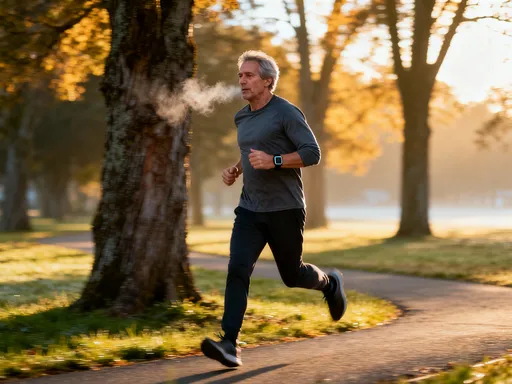
Determined to see what would happen, I committed to a simple 6-week aerobic routine: 30 minutes of moderate-intensity activity, five days a week. I rotated between brisk walking in the park, sessions on the elliptical machine, and outdoor cycling on weekends. I didn’t push for speed or distance. My only rule was consistency—showing up, moving steadily, and staying in the “can talk but not sing” zone.
To track progress, I recorded three key metrics daily: resting heart rate upon waking, sleep quality (using a basic sleep tracker), and subjective ratings of energy and mental clarity on a scale of 1 to 10. I also noted how I felt during everyday activities—carrying groceries, walking up hills, or playing with my children. At the start, my resting heart rate averaged around 78 beats per minute. By week three, it dropped to 72. By week six, it stabilized at 68—a sign that my heart was becoming more efficient.
The changes in energy were even more noticeable. Before the experiment, I relied on afternoon coffee to power through work. By week four, I no longer needed it. My mental fog lifted, and I found myself more focused during meetings and more patient at home. Sleep improved too—fewer nighttime awakenings and a deeper, more restful quality. I wasn’t losing dramatic amounts of weight, but that wasn’t the point. The real transformation was internal: I felt more present, capable, and in tune with my body. The most unexpected benefit? A quiet sense of calm. I wasn’t just more active—I was more balanced.
How to Test Your Own Aerobic Baseline (No Lab Needed)
You don’t need expensive equipment or a doctor’s referral to assess your aerobic fitness. Simple, at-home tests can give you valuable insights. One of the easiest is the “talk test.” During physical activity, if you can speak in full sentences but not sing comfortably, you’re likely in the moderate-intensity aerobic zone. If you’re gasping for air, you’re probably pushing too hard. If you can sing easily, you may not be working hard enough.
Another method is the step test. Stand in front of a sturdy step or low bench (about 6 to 8 inches high). Step up and down at a steady pace—up with one foot, then the other, then down with one, then the other—for three minutes. Afterward, sit down and check your pulse for one minute. For women in their 30s to 50s, a recovery heart rate below 90 beats per minute is generally considered good. Above 100 may suggest room for improvement. Again, this isn’t about passing or failing—it’s about understanding your starting point.
A timed walk test can also be revealing. Walk one mile at your normal pace and note how long it takes and how you feel. For most healthy adults, completing it in 15 to 20 minutes is a reasonable goal. If it takes significantly longer or leaves you overly winded, it may be a sign that building aerobic endurance should be a priority. These assessments aren’t diagnostic, but they’re practical tools to guide your efforts. If you have underlying health conditions or experience chest pain, dizziness, or extreme shortness of breath during light activity, it’s important to consult a healthcare provider before starting a new routine.
Building a Sustainable Routine: Practical Steps Anyone Can Take
One of the biggest mistakes people make is starting too fast. Enthusiasm fades when workouts feel punishing. The key to long-term success is starting low and going slow. Begin with just 10 to 15 minutes of brisk walking three times a week. Focus on showing up, not on performance. As your stamina improves, gradually increase duration before intensity. Adding five minutes every week is more effective—and safer—than jumping to an hour right away.
Another crucial factor is enjoyment. If you dread your workout, you won’t stick with it. Try different activities—dancing to your favorite music, walking with a friend, swimming on a hot day, or cycling through a scenic trail. The best aerobic exercise is the one you’ll actually do consistently. For many women in their 30s to 50s, life is already full. The goal isn’t to add one more stressful obligation, but to weave movement into your day in ways that feel natural. Take walking meetings, park farther from store entrances, or do a 10-minute walk after meals. These small choices add up.
Fitness trackers and apps can be helpful tools, but they shouldn’t become sources of stress. Use them to monitor trends, not to obsess over daily numbers. Seeing your average resting heart rate improve over weeks is motivating. But fixating on step counts or calorie burn can backfire. The goal is health, not perfection. Celebrate consistency—five days of movement, even if brief, is more valuable than one intense session followed by three days of soreness and inactivity.
Beyond the Body: Mental and Emotional Shifts I Didn’t Expect
I went into this experiment expecting physical changes—better stamina, lower heart rate, maybe a little weight loss. What I didn’t anticipate was the impact on my mental and emotional well-being. Within weeks, I noticed I was less reactive to stress. Small frustrations that used to rattle me—traffic, work deadlines, household chaos—felt more manageable. I wasn’t just calmer; I felt more resilient.
Science explains part of this. Aerobic exercise triggers the release of endorphins, natural chemicals that promote feelings of well-being. It also increases blood flow to the brain, which supports cognitive function and emotional regulation. Over time, regular aerobic activity can even help regulate stress hormones like cortisol. But beyond the biology, there was a psychological shift. Showing up for myself each day—rain or shine, tired or not—built a quiet confidence. I began to trust myself more. I had proven I could commit, even when motivation was low.
This changed how I viewed exercise altogether. It was no longer a form of punishment for eating too much or a desperate attempt to look a certain way. It became a daily act of self-respect. Moving my body wasn’t about changing my appearance; it was about honoring my health, energy, and longevity. That mindset shift made all the difference. When exercise is framed as self-care, it becomes sustainable. It’s not something you force yourself to do—it’s something you choose, because you know it makes you feel better, inside and out.
Aerobic exercise isn’t flashy, but it’s foundational. What began as a personal experiment became a long-term commitment—not because I wanted to look different, but because I felt fundamentally better. It taught me that true health isn’t measured in reps or resistance, but in resilience, breath, and balance. Listening to your body through movement might be the most honest health assessment you’ll ever take.